UX/UI Design
Design Thinking
Usability testing
User-centered Design
UX Research
Wireframing
Prototyping
~4 minute read
Nov 2025 - Jan 2026
Context
TL;DR - Key findings
Pinterest is not a creator-focused platform, rather a visual-search engine that is based on inspiring its users. By focusing on creators, Pinterest could potentially gain trust amongst some of the users, and therefore have more revenue.
Trigger
As a daily Pinterest user, I repeatedly couldn't trace pins back to their original creators. When inspiration struck, I couldn't go deeper - learn how something was made, trust its origin, or follow the person behind it.
Research
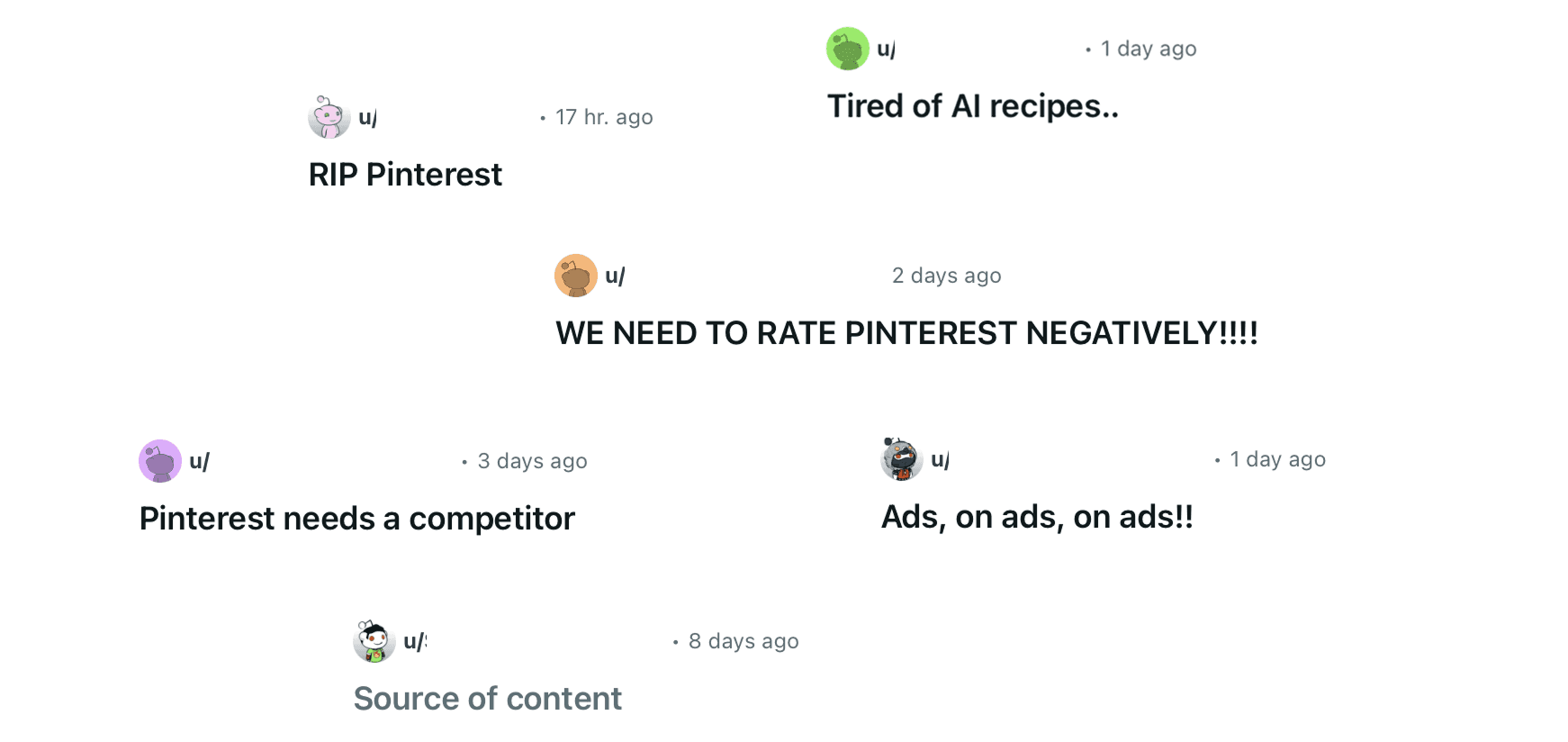
During my research, I found that most users agree on this statement:

A museum of sorts. Pinterest proved itself to be the go-to place for inspiration, but also a calming place to relax our minds after a constant up-stream of new information on other social platforms.
“We’re making sure it’s additive to people’s lives, not addictive…”
- Bill Ready, CEO of Pinterest (Yahoo Finance interview, Mar 27, 2023)
In this case study, I focus on improving the creator profile experience by introducing functionality that clearly communicates authorship and ownership.
User interviews
Competitor Analysis
Pinterest isn’t simply a “social network.” It sits in between visual search engine, inspiration archive, and creator platform.
Solving the problem
Instead of adding creator signals everywhere, I explored an opt-in source trail that lets users intentionally discover where a pin originally came from, which keeps the feed clean and inspiration-first.
This will be achieved through these 3 goals:
Strengthen creator authority on Pinterest through creator profiles, without compromising the platform’s inspiration-first, gallery-like experience.
Help users understand where ideas come from by making original creators and sources easy to recognize.
Increase creators’ confidence in publishing original work by reinforcing ownership and attribution signals on their profiles.
Early exploration
Pinterest isn’t simply a “social network.” It sits in between visual search engine, inspiration archive, and creator platform.
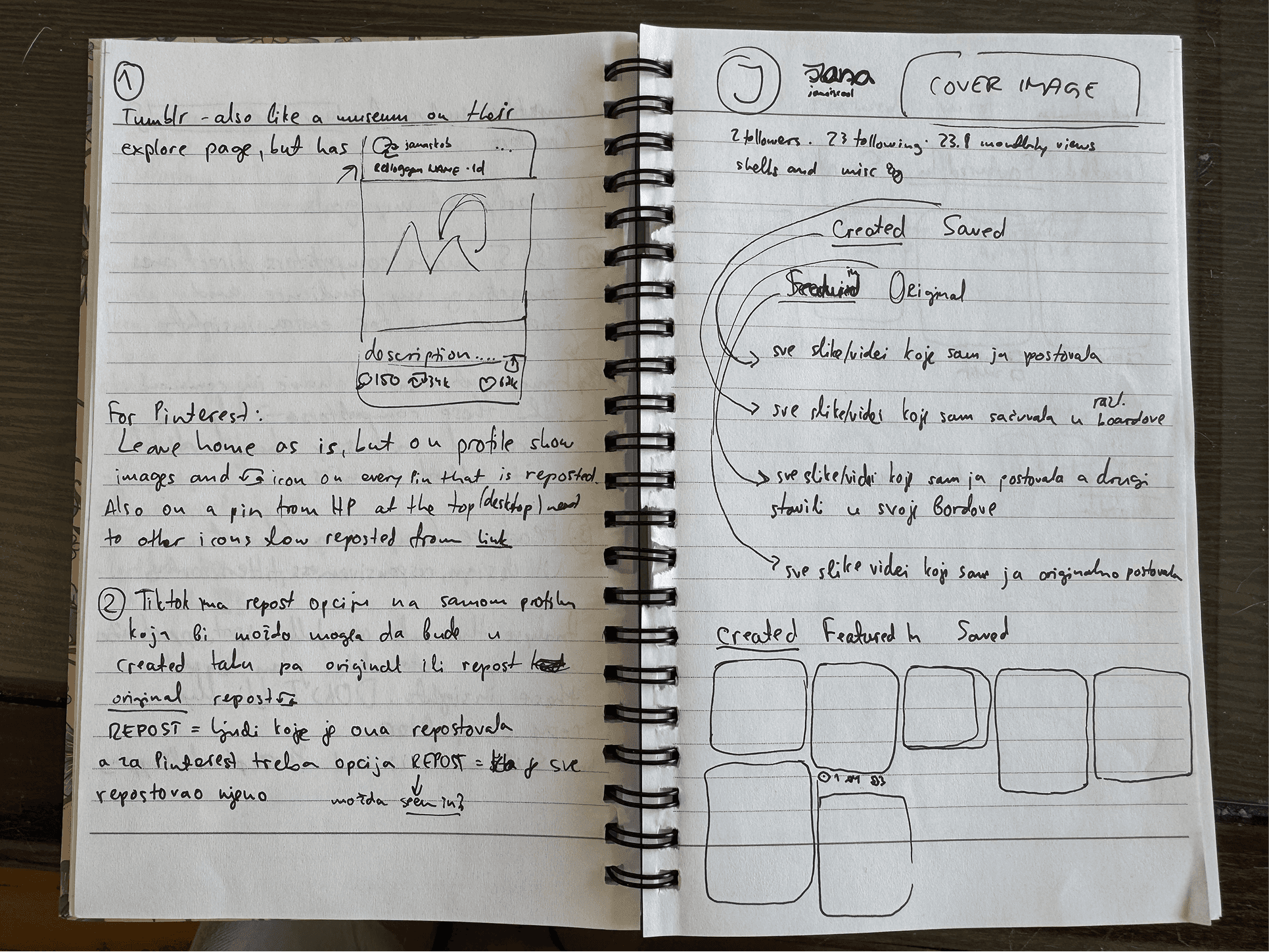
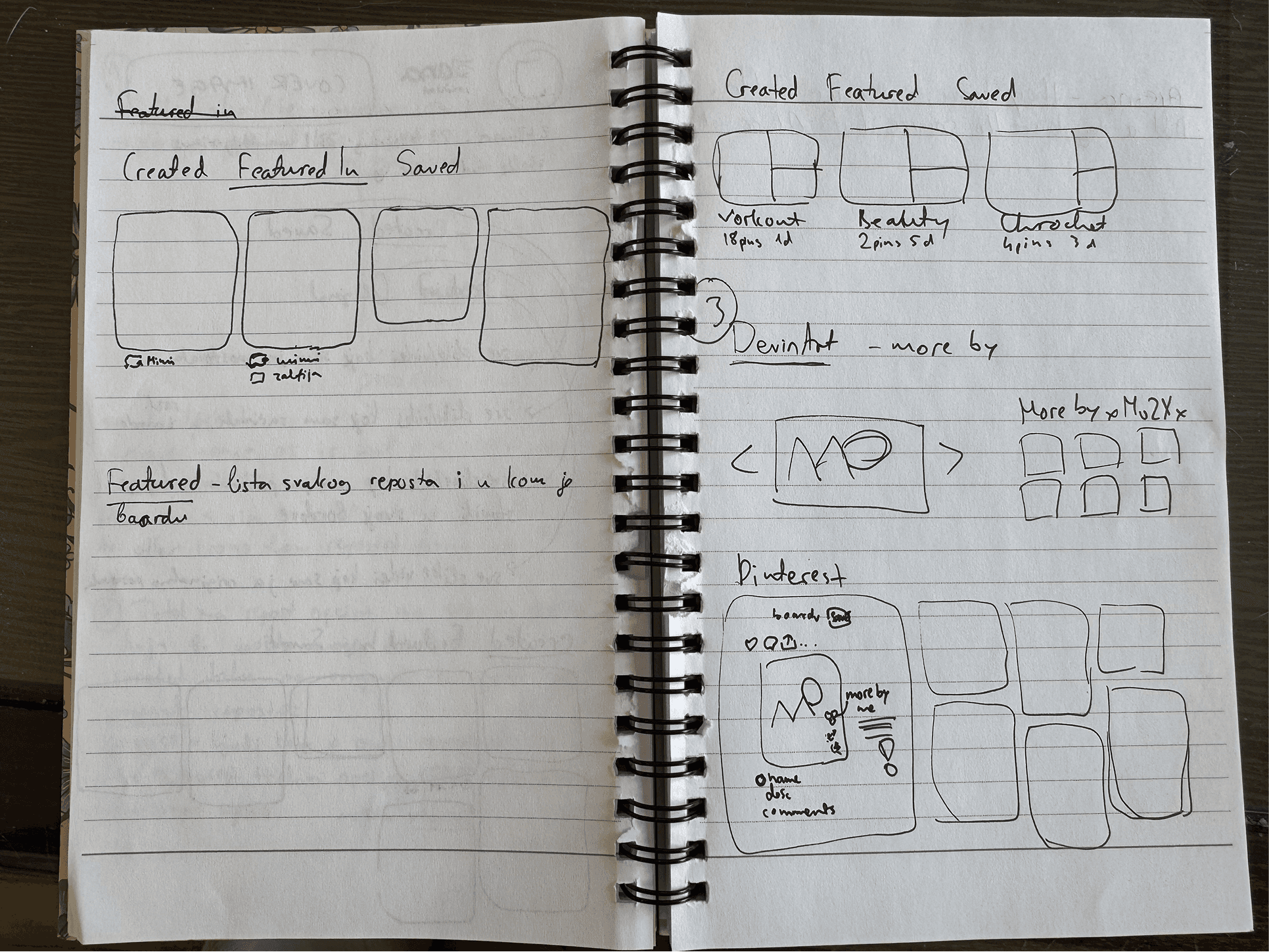
Early explorations focused on where the “original source” action should live, and how visible attribution could be without adding visual noise.
Outcome/Validation plan
If implemented, success would be measured through increased visits to original sources and deeper session exploration to show that users move from passive inspiration into learning.
Have you seen other case studies?
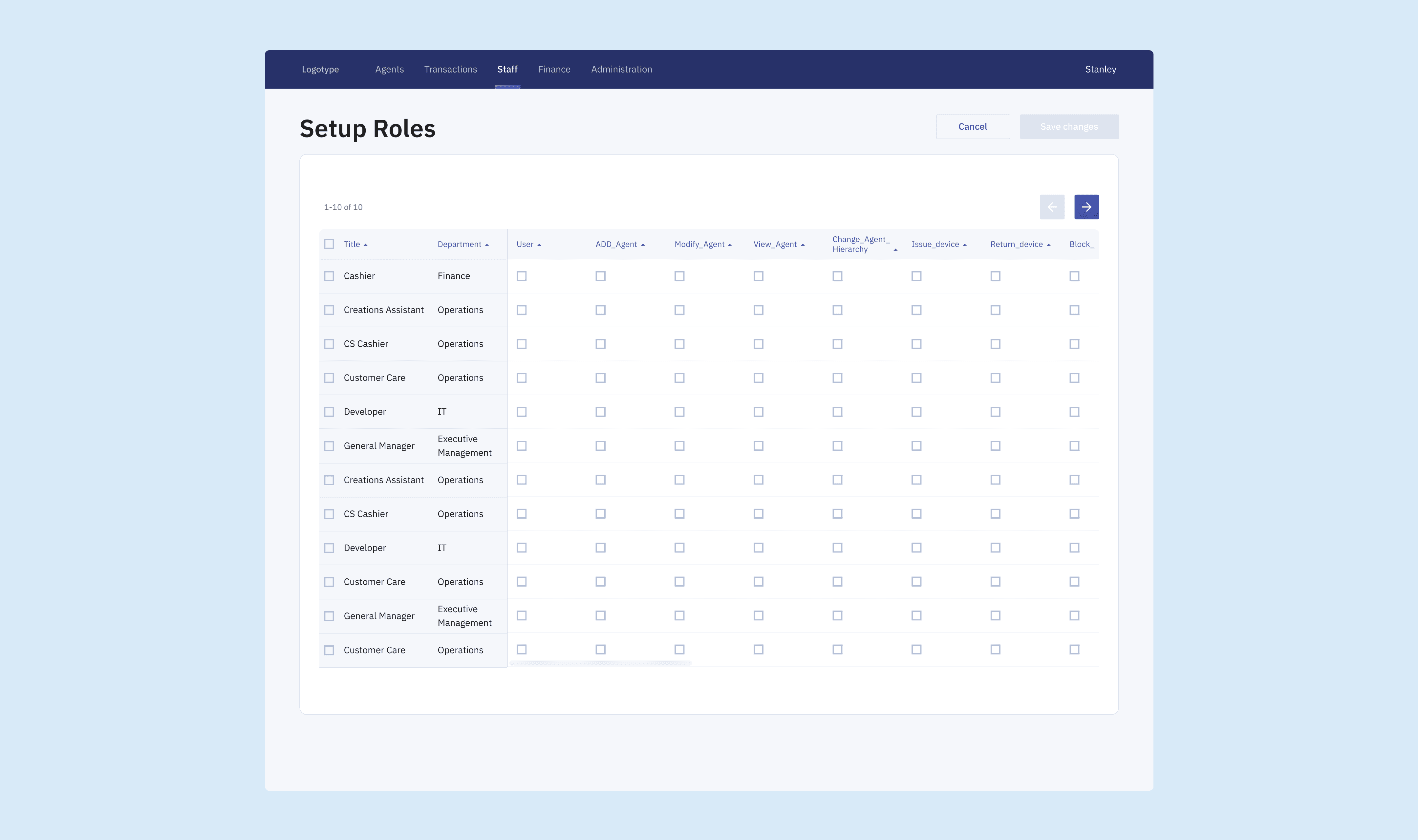
Capricorn Digital
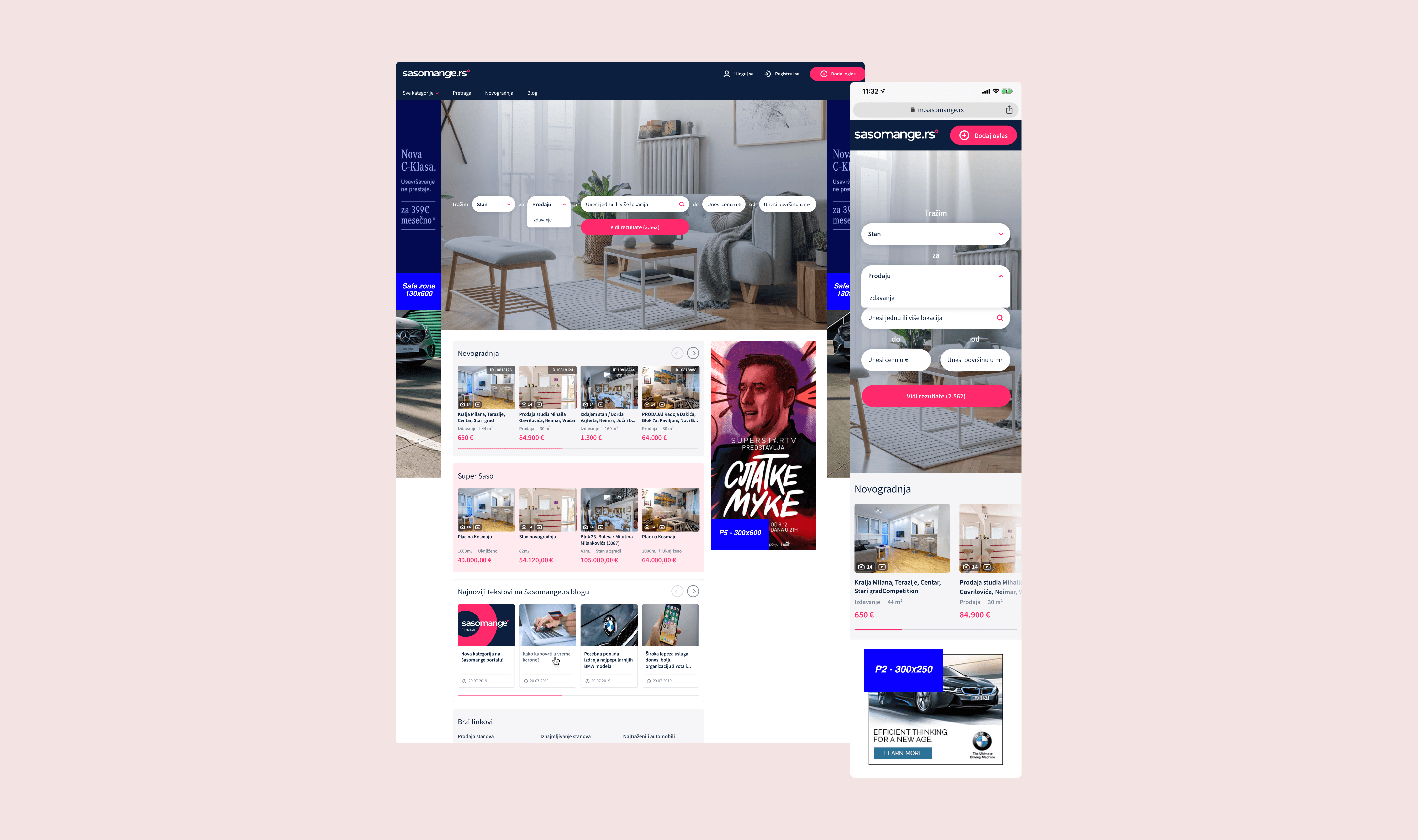
Sasomange.rs
Made with care - always happy to chat.


©2026
Jana Skobic